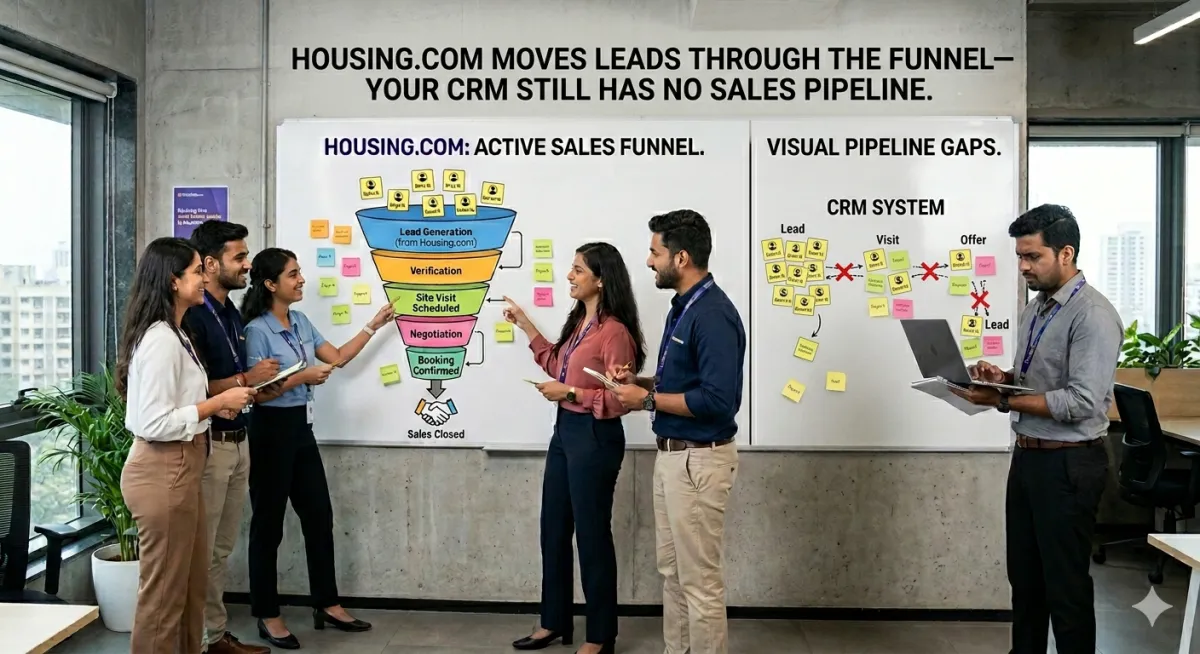
Housing.com Moves Leads Through the Funnel—Your CRM Still Has No Sales Pipeline
 by: AutostreamPublished on: 30/05/2026
Real estate is no longer just about getting inquiries. Today, platforms like Housing.com help buyers explore properties, compare locations, check price trends, and connect with sellers through a structured property search journey. Housing.com lists
Tata Neu Connects Ecosystems—Your Data Still Lives in Silos
by: AutostreamPublished on: 22/05/2026Tata Neu is not just an app. It is an ecosystem. From shopping to travel, food, payments, rewards, and daily services, Tata Neu brings multiple customer touchpoints into one connected experience. The customer does not feel like they are moving betwe

Decathlon Optimizes at Scale—Your Sales Process Breaks Under Volume
by: AutostreamPublished on: 15/05/2026Decathlon handles thousands of customers every day because it runs on systems, not memory. Every product is organized. Every order is tracked. Every store process is structured. Every customer journey is optimized.

Your Sales Process Feels Cheap—Here’s What Apple Would Do Differently
by: AutostreamPublished on: 03/04/2026Let’s be honest—most sales processes don’t feel premium. They feel rushed, transactional, and desperate. Follow-ups that sound like spam. Demos that feel like feature dumps. Closing tactics that scream, “Please buy.” Now compare that to Apple. Apple doesn’t “sell.” It engineers desire. And that’s exactly where your sales process is falling apart.